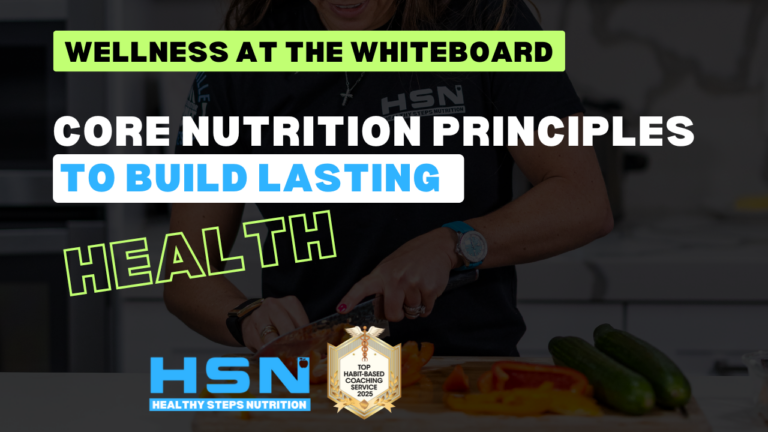
This Wellness at the Whiteboard is all about the foundation of the fitness pyramid: nutrition.
With so much confusion and misinformation out there, our goal is to make nutrition simple, realistic, and effective—so you can fuel your body properly and actually see the results you’re working so hard for.
Let’s break it down into our three core nutrition principles.
Core Principle #1: Whole Foods First
When we say whole foods, we’re not talking about shopping at Whole Foods—we’re talking about eating foods as close to how they were grown or raised as possible.
Think:
Meat and fish
Vegetables
Fruits
Nuts and seeds
Some starch
Minimal added sugar
A simple way to put this into action is the plate method:
🥦 ½ plate vegetables
🍗 ¼ plate protein
🍚 ¼ plate starch
Pro tip: Eat your protein and vegetables first, then your starch. This helps with fullness, blood sugar balance, and portion control—without tracking or restriction.
Core Principle #2: Balance Your Macronutrients
You’ve probably heard conflicting advice:
“Cut carbs”
“Eat only protein”
“Fat is bad”
“Fat is everything”
Here’s the truth: protein, carbohydrates, and fats all matter.
Why Protein Matters So Much
Protein is the building block of muscle—and one of the most common things we see clients under-eating.
If you’re training hard but not eating enough protein, building muscle becomes extremely difficult.
That’s why we recommend:
Protein at every meal
Protein at every snack
Why Balance Matters
Balancing protein, carbs, and fats helps:
Keep you full and satisfied (goodbye, hangry moments)
Stabilize blood sugar
Prevent energy crashes
Support fat loss and muscle building
When blood sugar spikes and crashes, you feel it—low energy, cravings, irritability, and inconsistent progress. Balanced meals help prevent that rollercoaster.
Core Principle #3: Limit Ultra-Processed Foods & Added Sugar
Ultra-processed foods are typically:
Made in a factory, not your kitchen
Marketed with flashy health claims
Designed to be hyper-palatable and addictive
If the front of the package says things like:
“High protein!”
“Excellent source of vitamins!”
…it’s worth flipping it over and checking the label.
Added Sugar Matters More Than You Think
Sugar is incredibly addictive—more so than many drugs—and food companies know it.
That’s why:
You can eat a whole sleeve of cookies
But not a whole bushel of apples
Here’s a quick way to understand labels:
4 grams of added sugar = 1 teaspoon
8 grams = 2 teaspoons
20 grams = 5 teaspoons
Many “healthy” foods like yogurt, oatmeal, and granola contain multiple teaspoons of added sugar per serving.
Why does this matter?
👉 9 out of the top 10 causes of death in the U.S. are caused or worsened by elevated blood sugar.
If our mission is to help prevent and reverse chronic disease, managing blood sugar is non-negotiable.
A Note on Alcohol
An occasional drink is fine—but if your goal is long-term health, prevention, and disease reversal, limiting alcohol is important.
Alcohol is directly linked to increased risk of cancers such as:
Breast cancer
Colon cancer
If you’re curious about cutting back, some great alternatives include:
Hiyo
Recess
Non-alcoholic beers (Blue Moon NA is a crowd favorite in our house)
If nutrition feels overwhelming, start here:
✔ Use the plate method
✔ Eat protein at every meal and snack
✔ Prioritize whole foods
✔ Shop the perimeter of the grocery store
✔ Limit ultra-processed foods
✔ Reduce added sugar and alcohol
Consistency—not perfection—is what creates results.
And remember:
Your post-workout protein shake alone isn’t enough. Protein needs to be spread throughout the day to support muscle, metabolism, and recovery.
Need Accountability and Support?
Understanding nutrition is one thing—doing it consistently is another.
That’s where our nutrition & health coaching program comes in.
When you sign up, you’ll be paired with Healthy Steps Nutrition Coach who:
Performs an initial assessment with biometric tracking
Develops goal setting
Builds a realistic, personalized plan
Helps navigate barriers
Provides weekly check-ins through the HSN app
Ongoing Education
Because real health isn’t just about workouts—it’s about nutrition, sleep, lifestyle, and support.